
What Is Final-Mile Delivery, and Why Is It the Hardest Leg
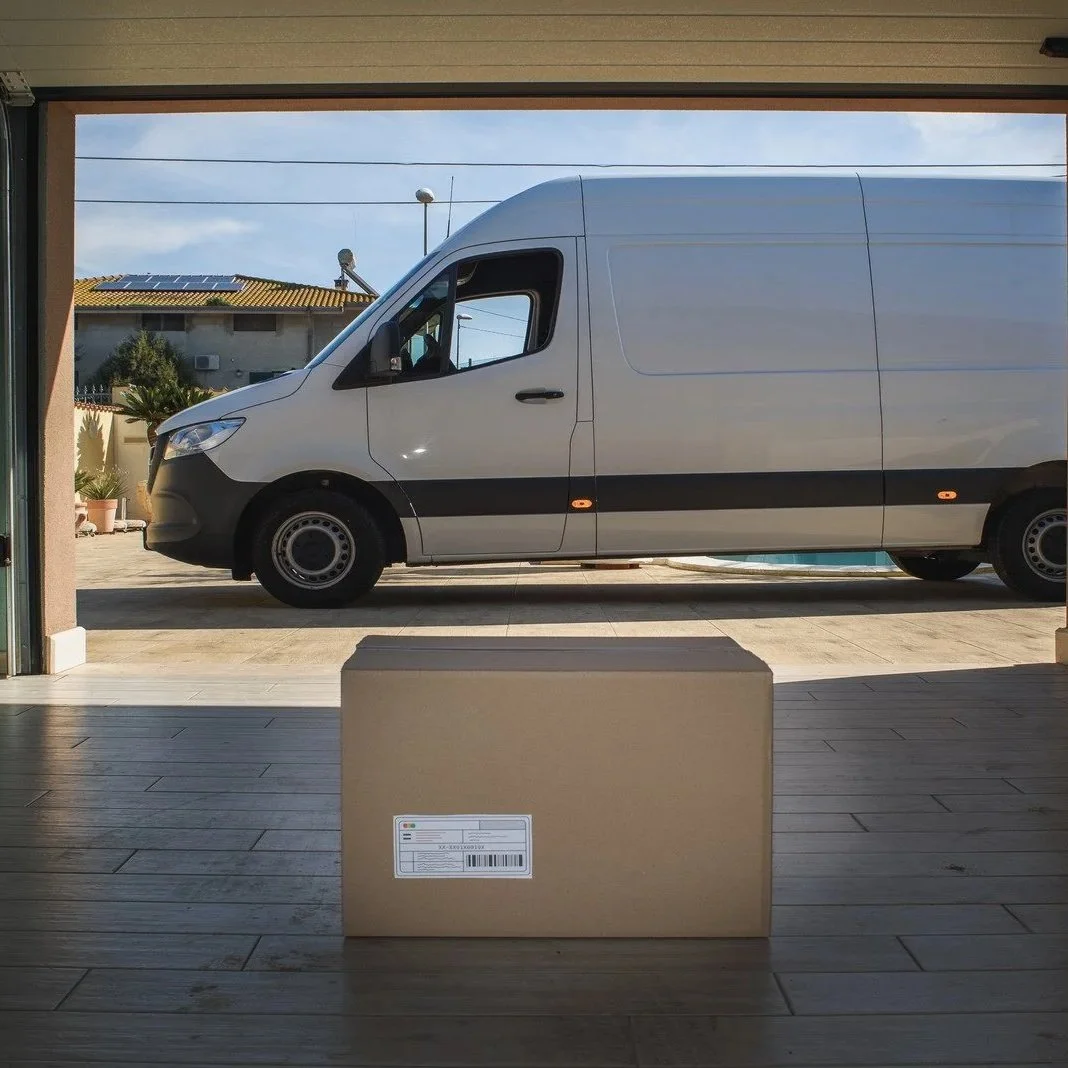
Quick Answer: Final-mile delivery is the last leg of the supply chain, moving a shipment from a local warehouse or distribution hub to the customer's door or job site. It is the hardest and most expensive stretch because one efficient truckload breaks apart into many scattered, low-density stops, each with its own access problem, time window, and chance of a failed delivery.
Your freight can cross the country on a single trailer, ride a rail line, sit in a port, and clear a regional hub without much drama. Then it hits the last few miles, and everything that made the long haul cheap stops working. One driver who moved forty pallets on the interstate now becomes twenty drivers making two hundred separate stops, each at a different address, on a different street, behind a different gate. That last stretch is final-mile delivery, and it routinely costs more than the entire trip before it. Understanding why is the difference between a delivery operation that holds its promises and one that bleeds money on redeliveries and complaint calls.
What Final-Mile Delivery Actually Means
Final-mile delivery, sometimes called last-mile, is the final leg of the supply chain: the movement of a shipment from a local warehouse or distribution hub to its end destination, whether that is a residential doorstep, an apartment unit, a retail back room, or an active job site. It is the point at which a shipment ceases to be bulk cargo and becomes an individual order delivered to a specific person.
Everything upstream of it is built for efficiency at scale. Long-haul trucking, ocean freight, and rail all move large volumes over long distances with very few stops, so the cost of moving any single item stays low. Final-mile inverts that. The distance shrinks to a handful of miles, but the number of stops explodes, and the cost per delivery climbs with it. This is the part of logistics the customer actually sees, which means it is also where a brand's reputation gets made or broken.
Why the Shortest Leg Costs the Most
The core reason the final-mile is so expensive comes down to what logistics people call the density problem. Think of the long-haul portion as a single fire hose pointed at one place: enormous volume, one direction, very efficient. Final-mile takes that same water and splits it into hundreds of thin streams pointed at hundreds of different targets. Every stream needs its own path, its own timing, and its own delivery.
Drop density is the measure that governs the whole thing. When ten stops are within a few blocks of each other, a driver can clear them quickly, and the cost of each delivery stays low because the truck, fuel, and the driver's hours are shared across many nearby drops. Spread those same ten stops across a wide, low-density area, and each one now carries the cost of the miles and minutes it takes to reach it. The truck spends more time driving between stops than actually delivering. Same number of packages, far higher cost per package. Density, not distance, is what makes or breaks the economics of the last mile.
Several other factors stack on top of that base cost:
- Failed deliveries and redelivery- If the customer is not home, there is no safe place to leave the item, or a signature is required and no one answers, the delivery fails. Now that the stop must be attempted again on a different route, the operation ends up paying for two or three trips to complete one order.
- Access issues- Gated communities require codes or a call to the gate. Apartment complexes mean finding parking, locating the right building, and carrying the item up. Many delivery points have no loading dock. Tight urban streets and no-standing zones turn a two-minute stop into a fifteen-minute one.
- Handling requirements- A small parcel gets dropped, and the driver moves on. A sofa, a refrigerator, or a piece of equipment requires two trained people, careful maneuvering through doorways and up stairs, placement in the customer's choice of room, and often the haul-away of the old item or its packaging.
- The promises around the delivery- Customers now expect a narrow appointment window, real-time tracking, and proof that the item arrived. Meeting those expectations takes coordination and technology that a simple point-to-point freight run never needed.
Parcel Final-Mile vs Big-and-Bulky Final-Mile
Not all last-mile deliveries are the same job, and lumping them together is where many operations go wrong. There are really two distinct worlds.
Parcel or small-package final-mile covers items one person can carry: the box left on a porch, the envelope through a mail slot. Speed and volume drive this world. Routes are dense, stops are quick, and success usually means simply getting the package to the address safely.
Big-and-bulky and freight final-mile covers furniture, appliances, fitness equipment, cabinetry, and other heavy or oversized goods. Here, the delivery itself is the hard part. These items need two-person crews, often must be brought inside and positioned, and may require light assembly or the removal of an old unit. A single delivery can take thirty minutes or more to the door. The economics, the training, and the scheduling all differ from parcel work, which is why serious operations treat the two as separate disciplines rather than running heavy goods on a parcel model.
The Service Levels: Curbside, Threshold, and White-Glove
For big-and-bulky freight, how far the crew takes the item is defined by the service level agreed on up front. Getting this right prevents the most common delivery-day dispute, when a customer expects the item in the bedroom, and the driver expects to leave it at the curb.
| Service Level | Where the item is delivered | What is typically included |
|---|---|---|
| Curbside | To the curb or driveway at the address | Item unloaded and left; customer handles the rest |
| Threshold | Just inside the first doorway or garage | Item brought in out of the weather; no further placement |
| White-glove | To the room of choice inside the home | Two-person crew, unpacking, light assembly, placement, and haul-away of packaging or the old item |
White-glove is the premium tier and the most operationally demanding, because it combines everything hard about the last mile: two trained people, in-home handling, assembly, and reverse logistics for whatever gets taken away. Threshold sits in the middle, and curbside is the closest big-and-bulky gets to a simple drop.
What Causes Failed Deliveries, and How to Cut Them
A failed delivery is the single most expensive event in the last mile because it multiplies the cost of a stop and delays the customer. Most failures trace back to a few predictable causes: the customer was not home during an unscheduled window, the driver could not get past a gate or into a building, the delivery point had no clear access, or a required signature could not be collected.
The fixes are mostly about information and communication moving in both directions before the truck rolls. Confirmed appointment windows put the customer at the address when the crew arrives. Proactive notifications, a text on the morning of delivery, and again when the driver is close, keep them ready. Access notes captured at the point of order, the gate code, the building number, the fact that the driveway is steep, or the freight lift is in the back, let the driver solve the problem before it becomes a failed stop. None of this is exotic. It is the difference between a route planned around real conditions and one planned around a list of addresses and nothing else.
What Actually Makes Final-Mile Work
The operations that run the last mile well are not simply trying harder. They are structured differently.
It starts with local warehousing and forward-stocking, which means positioning inventory in a facility close to the customers it serves rather than shipping every order from a distant central hub. When the goods are already nearby, the final leg is truly short, delivery windows tighten, and a same-week or next-day promise becomes realistic instead of aspirational.
From there, route optimization sequences each day's stops to build the highest possible drop density, cutting miles and idle time between deliveries that quietly drive-up costs. Appointment scheduling and communication keep customers present and informed, so fewer stops fail. Trained two-person crews handle the white-glove and big-and-bulky work that a single parcel driver simply cannot. And tracking and proof-of-delivery technology ties it together, giving the customer visibility and giving the operation a verified record that the item arrived as promised.
Local conditions shape all of this. In a dense, fast-growing area, gated communities and large managed complexes are common, so access management is not an edge case; it is most stops. Heat and humidity add another layer: sensitive goods, from electronics to certain furnishings and materials, can be affected by long exposure in a hot trailer, which puts a premium on short final legs and on getting items from a nearby warehouse to the door quickly rather than letting them sit in transit.
Reverse Logistics: The Part Nobody Plans For
Deliveries do not only move outward. Returns, exchanges, damaged-item pickups, and haul-away of old units all flow in the opposite direction, and that flow is called reverse logistics. It is harder than outbound because you are collecting individual items from scattered origins on the customer's schedule rather than dispatching from a single organized warehouse.
For big-and-bulky operations, reverse logistics often runs on the same trip as the delivery: the white-glove crew places the new appliance and removes the old one in a single visit, then routes the removed unit for recycling, refurbishment, or disposal. Building that capability into the delivery model, rather than bolting it on later, is a mark of an operation that has thought the whole cycle through.
Frequently Asked Questions
Because the cost in delivery tracks stops and drop density, not miles. The long haul moves huge volumes in one direction with almost no stops, so each item's share of the cost is tiny. The last-mile splits that volume into many individual deliveries scattered across an area, and each stop incurs the driving time, fuel, and labor to reach it. Add the failed deliveries that force a second or third attempt, and a leg of a few miles can outweigh a haul of a thousand.
They define how far a crew takes the item. Curbside leaves it at the curb or driveway. Threshold brings it just inside the first doorway or garage, out of the weather, but goes no further. White-glove carries it to the room of choice, unpacks it, performs light assembly, positions it, and hauls away the packaging or the old unit. The tiers exist so the price matches the labor: white-glove needs a trained two-person crew and far more time at the door than a curbside drop.
The common causes are the customer not being home during an unannounced window, a gate or building the driver cannot get past, no clear access at the delivery point, and a required signature that no one is there to give. The prevention is information flowing before the truck leaves: a confirmed appointment window, a heads-up text the morning of, and again when the driver is minutes away, and access notes such as gate codes and building numbers captured when the order is placed, so the driver solves the obstacle in advance.
Forward-stocking positions inventory in facilities near the customers it serves instead of shipping every order from a single far-off hub. When the goods already sit close to the delivery area, the final leg is short by design, which makes tight delivery windows and next-day or same-week service realistic. It also cuts the time a shipment spends riding in a trailer, which matters for goods sensitive to heat or humidity that should not sit in transit longer than necessary.
Reverse logistics is everything moving back toward the warehouse: returns, exchanges, damaged-item pickups, and removal of old units. It is harder than outbound because items come from scattered origins on the customer's timing rather than from one organized dock. In big-and-bulky work, it is often folded into the delivery trip, where the crew installs the new item and takes the old one in the same visit, then routes the removed unit toward recycling, refurbishment, or disposal instead of running a separate errand.
Customers usually follow a delivery via a tracking link tied to the order, which updates as the shipment moves and often narrows to a live window or map view on delivery day, with text or email alerts. Proof of delivery is the record confirming the item arrived: depending on the service, that can be a signature captured on the driver's device, a timestamped photo of the placed item, or a geo-tagged confirmation of the stop. For higher-value or white-glove deliveries, a photo plus signature is common, providing both parties with a clear record if a question comes up later.
Map out a final-mile plan that fits your freight and your customers — Delivery and Warehousing Solutions serves West Palm Beach, Palm Beach Gardens, Jupiter. Call (561) 842-0044.
