
FTL vs. LTL Shipping: Which Fits Your Freight?
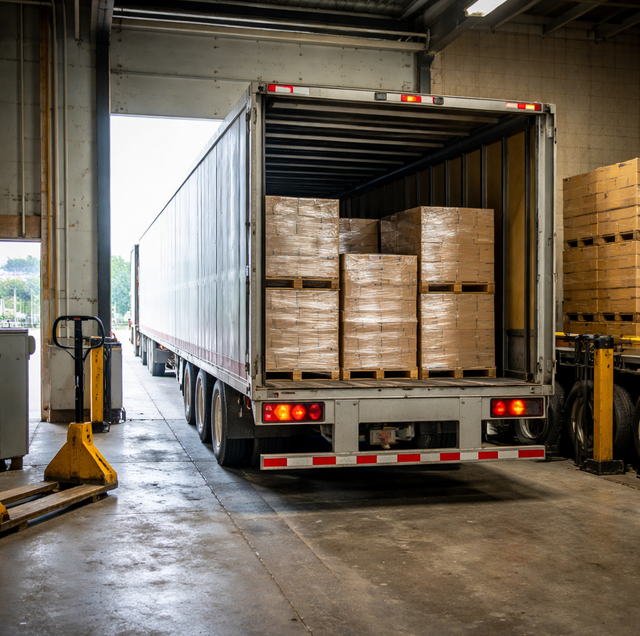
Quick Answer: FTL (full truckload) books an entire trailer for a single shipment, moving direct with faster transit and fewer handling touches. LTL (less-than-truckload) shares one trailer among several shippers, so you pay only for the space and weight you use, which suits smaller loads that can tolerate extra stops and terminal transfers.
Two shippers with pallets on a dock can end up on very different trucks. One has 22 pallets and needs the whole trailer. The other has three pallets and would waste most of a trailer's capacity paying for empty air. That gap between a shipment that fills a truck and one that fills a corner is the whole reason two freight modes exist. Choosing the wrong one either strands your budget or slows your delivery, so the decision deserves more thought than a quick guess at the shipping desk.
The Shared Trailer vs Dedicated Trailer Idea
Before comparing the two modes, it helps to understand the single distinction underneath them: who else is on the truck.
A dedicated trailer carries one customer's freight and nothing else. From the moment it loads until it reaches the receiver, the space belongs to you. A shared trailer carries freight from several customers at once, each occupying a portion of the deck. The carrier fits your pallets alongside other shipments headed in a similar direction, and everyone splits the cost of moving that one truck.
That single fork, dedicated space, or shared space drives everything else: how fast the load moves, how many hands touch it, how the price is calculated, and what kinds of goods travel well on it.
FTL: Full Truckload Explained
Full truckload, or FTL, means one shipment books the entire trailer. The load either fills the deck or comes close enough that sharing the remaining space makes little sense.
Because the trailer is dedicated, an FTL shipment usually moves point to point. It loads at the origin, drives to the destination, and unloads, with no terminal stops in between. The freight is picked up once and set down once.
Where FTL performs best
- Large or high-volume loads: Shipments in the range of roughly 15 or more pallets, or freight heavy enough to weigh out a trailer before it fills, are natural FTL candidates.
- Time-sensitive freight: With direct transit and no terminal transfers, FTL is typically the faster mode over the same distance.
- Fragile or high-value goods: Fewer handling touches means fewer chances for a forklift to catch a corner. The load stays put from dock to dock, lowering damage risk when freight is properly secured and palletized.
The trade-off is capacity. If your freight only occupies part of the deck, FTL means paying for a full trailer you did not fill, which is rarely the cost-efficient choice for a small shipment.
LTL: Less-Than-Truckload Explained
Less-than-truckload, or LTL, combines freight from multiple shippers on one trailer. You reserve the portion of the deck your pallets need, and the carrier fills the rest with other customers' goods.
LTL is built for smaller shipments, commonly around one to six pallets and weights ranging from a few hundred pounds up to roughly 15,000 pounds. Below and above that band, other modes usually fit better.
How LTL moves
Because one truck serves many shippers, LTL freight rarely goes straight from origin to destination. It travels through a hub-and-spoke terminal network. A pickup truck brings your pallets to a local terminal; they get sorted and loaded onto a line-haul trailer, and they may pass through one or more additional terminals before a final truck delivers them. Each transfer is another set of forklift touches and another stop, which lengthens transit and raises the odds of handling damage. Fragile goods bound for LTL should be crated or packaged to survive that extra movement.
How LTL is priced
LTL rating leans heavily on freight class and the NMFC (National Motor Freight Classification) system. Freight class reflects how easily and safely an item ships, factoring in density, stowability, handling, and liability. A dense, sturdy pallet generally rates a lower class than a light, bulky, or awkward one. Weight and the space consumed also feed the calculation. These rules and classifications vary by carrier, so confirm the specifics of any classification rather than assuming a figure.
The strength of LTL is cost-efficiency for partial loads. You share the expense of the trailer instead of shouldering all of it, which usually makes far more sense than paying full-truckload rates to move a few pallets.
Reading the Decision Factors
Most freight sorts itself once you weigh a handful of practical factors together rather than one at a time.
Shipment size and weight: This is the first filter. A load pushing the pallet count or weight toward a full trailer points to FTL. A handful of pallets points to LTL. The middle is where judgment comes in.
Budget vs speed: LTL usually wins on cost-efficiency for small loads because the trailer expense is shared. FTL usually wins on speed because it moves direct. Deciding which matters more for a given order is half the battle.
Fragility and handling tolerance: Every terminal transfer is a handling event. Goods that shrug off movement travel fine on LTL. Delicate, tightly packed, or high-value items lean toward FTL, where the load is touched far less.
Frequency: A shipper moving steady weekly volume on the same lane may consolidate several small orders into fuller, more cost-efficient trailers, an option that a one-off small shipment does not have.
No single factor decides it. A fragile three-pallet order that must arrive fast might justify FTL despite its size, while a sturdy, flexible-timeline load might ride LTL even at a higher pallet count.
The Middle Ground: Partial Truckload and Consolidation
Freight does not always fall cleanly into "fills a trailer" or "fits in a corner." When a shipment is too big for economical LTL but too small to justify a full trailer, a partial truckload can fit. Partial moves roughly six to eighteen pallets with minimal terminal handling, capturing some of FTL's directness without paying for space you do not use. Because it skips much of the terminal sorting, it also cuts the handling touches that make LTL riskier for delicate freight.
Consolidation is a related tactic. Several small shipments headed the same direction get combined into one fuller trailer, which spreads the cost and can reduce handling compared with sending each separately through the LTL network. For shippers with recurring small orders, consolidation often bridges the gap between the two core modes.
How a 3PL Helps You Choose
A third-party logistics provider spends every day matching freight to the right mode and carrier, which turns a guessing game into a routine call. A 3PL weighs your pallet count, weight, freight class, timeline, and fragility against live carrier capacity, then books the mode that balances cost and service for that specific load. When freight sits in the awkward middle, the provider can compare LTL, partial, and consolidation options side by side instead of defaulting to whichever is easiest to book.
A 3PL also handles the details that trip up direct shippers: assigning the correct freight class to avoid reclassification adjustments, packaging guidance so fragile goods survive LTL handling, and carrier selection based on lane strength and reliability rather than a single quote. Over many shipments, that steady mode-matching adds up to fewer surprises and steadier cost-efficiency.
Frequently Asked Questions
Carriers inspect and reweigh freight at terminals. If your pallet's actual density, dimensions, or classification differs from what you declared, the carrier issues a reclassification or reweigh adjustment and rebills the shipment at the corrected class. Accurate dimensions and weight at booking prevent these after-the-fact corrections.
No. FTL refers to booking the entire trailer, not filling every cubic foot. Shippers also choose FTL when freight is heavy enough to hit the legal weight limit before the deck fills, or when a load is fragile enough that they want dedicated space and zero terminal handling even though it does not physically fill the trailer.
A common 53-foot dry van holds around 26 standard 48-by-40-inch pallets on the floor and carries up to roughly 45,000 pounds of freight, depending on equipment and legal axle limits. Knowing that ceiling helps you judge when a growing shipment has crossed from LTL or partial territory into full truckload.
Yes, through refrigerated LTL networks, though the option is more limited than dry LTL. Because temperature-sensitive goods share trailer space and pass through terminals, coordinating consistent temperature across multiple transfers is harder, so many temperature-critical loads move FTL in a dedicated reefer instead.
LTL commonly adds accessorials for services like liftgate use, residential pickup or delivery, and inside delivery, since terminal-based freight often reaches locations without a dock. FTL typically involves fewer accessorials because the direct dock-to-dock move skips most of those touchpoints, though detention and layover fees can still apply if loading or unloading runs long.
FTL is generally simpler to trace because one driver and one truck carry the load the entire way, so a single check-in reveals its position. LTL passes through multiple terminals and handoffs, so tracking relies on scan events at each transfer point rather than continuous location, which can leave gaps between updates.
Not sure which mode your freight needs — talk it through with a team that matches loads to carriers every day. Delivery & Warehousing Solutions serves West Palm Beach, Fort Lauderdale, and Miami. Call (561) 842-0044.
