
What Is Cross-Docking? The Method That Skips the Shelf
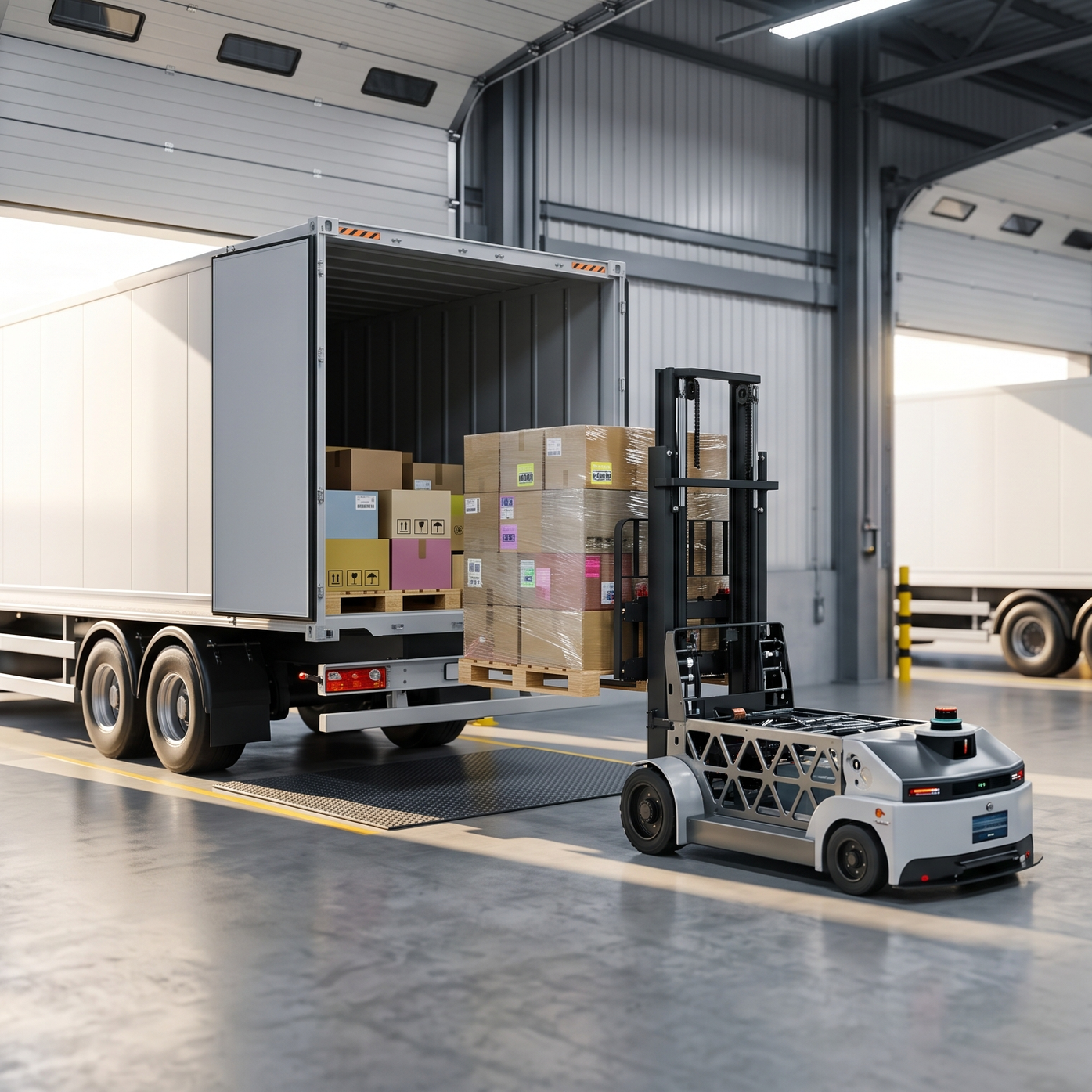
Quick Answer: Cross-docking is a logistics method where incoming freight is unloaded, sorted by destination, and reloaded onto outbound trucks with little or no time in storage, often within hours. It works best for high-volume, fast-moving, predictable goods and complements traditional warehousing rather than replacing it.
Move enough freight through a facility, and you start noticing where time disappears. A shipment lands at the receiving dock in the morning, gets scanned, put away on a rack, and then sits. Days later, a pick order pulls it back out, someone re-handles it, and it finally goes onto an outbound truck. For a lot of inventory, that cycle is exactly right. For a fast-moving product, every one of those steps is time the freight spends standing still instead of getting closer to the customer.
Cross-docking is the method built around that observation. Instead of routing goods through storage, it moves them from the receiving dock almost directly to the outbound dock, with little or no time on a shelf in between. If you run a distribution operation or manage inbound and outbound flow for a business, understanding when this approach fits (and when it doesn't) can change how you think about your dock schedule.
How Cross-Docking Actually Works
Picture the receiving and shipping sides of a facility as two ends of a single flow rather than two separate operations. In a cross-dock, freight enters one end and leaves the other, and the work in between is sorting rather than storing.
The sequence runs like this. An inbound shipment arrives and is unloaded at the receiving dock. Rather than being assigned a storage location, the freight is immediately sorted and consolidated by where it needs to go next: this pallet for one store, that carton for another customer's order, these units combined with product from a different inbound truck heading the same direction. Once it is grouped by destination, it moves across the dock and is loaded onto outbound vehicles. In a well-run operation, the whole process can happen within hours of the truck backing in.
Think of it like a passenger changing planes at a connecting airport. They land, walk to a different gate, and board the next flight. They never leave the terminal to check into a hotel and come back tomorrow. Cross-docking treats freight the same way. The dock is a transfer point, not a destination, and the goal is to keep product moving through the building instead of parking it.
That continuous flow is the whole point. The freight is never assigned to a permanent home on a rack, never put away, and never picked back out later. It is received, sorted, and shipped as one motion.
The Two Main Types: Pre-Distribution and Post-Distribution
Not every cross-dock sorts freight the same way, and the difference comes down to when the allocation decision gets made.
Pre-distribution cross-docking sorts inbound goods for customer orders before the freight even arrives. The allocation is decided in advance. When the truck is unloaded, the sort is essentially a matter of executing an existing plan. Each unit already has a destination attached to it. This works when you know your downstream orders early and demand is stable enough to commit to that plan.
Post-distribution cross-docking holds the sort until the goods are physically on the dock. The freight arrives, and only then is it allocated, based on the demand picture at that moment. This gives you a window to react to current conditions before committing product to a destination. If order patterns shift or one location suddenly needs more than expected, you decide at the dock rather than being locked into an earlier plan.
Neither is automatically better. Pre-distribution rewards planning and predictable demand. Post-distribution buys flexibility when you want to see current numbers before you allocate. Which one fits depends on how far ahead your order visibility runs.
What You Gain Operationally
The benefits of cross-docking are easiest to see when you frame them in terms of time and handling rather than anything else.
Faster transit and less time in storage- Freight that skips the put-away and pick cycle reaches its next stop sooner. Products that would otherwise wait days on a rack can leave the same day they arrive. For anything time-sensitive, that compression matters.
Fewer touches- Every time a product is put away and re-picked, someone handles it again. Each handling step is an opportunity for the freight to move, get scanned, and be routed. Cutting the storage step out cuts the number of times a human or a forklift touches the load.
Better fit for fast-moving and time-sensitive goods- Perishables that have a shelf-life clock running, retail replenishment stock that stores are waiting on, and high-turnover SKUs all benefit from staying in motion. These are goods for which sitting still is the problem, and cross-docking is designed to keep them from sitting.
Load consolidation and deconsolidation- A cross-dock is a natural place to combine several less-than-truckload (LTL) shipments heading the same direction into a single full load, or to break a bulk inbound shipment down into individual store orders. Both happen in the same sorting pass, using the dock as the mixing point.
When Cross-Docking Fits, and When It Doesn't
Cross-docking is a specialized tool, not a default setting for a whole operation. Matching it to the right freight is what separates a smooth dock from a jammed one.
It fits best when your freight is high-volume, predictable, and fast-moving. Steady flow gives the dock a rhythm. Predictability lets you schedule inbound and outbound around each other so trucks aren't waiting. Fast turnover means the freight wants to keep moving, which is exactly what the method delivers. Consolidating LTL freight into full loads and deconsolidating bulk into store-level orders are classic fits.
It works against you when the freight is slow-moving, needs inspection or storage, or rides on unpredictable demand. Slow-moving inventory has no reason to be rushed across a dock; it does better in a storage slot until it is actually needed. Goods that require inspection or quarantine must stop for examination, which is the opposite of continuous flow. And when demand is erratic, you can't reliably line up an outbound truck for freight that just arrived, so it ends up sitting on the dock anyway, which is the worst of both worlds.
Cross-docking also carries real operational requirements. It leans heavily on coordination because inbound and outbound schedules must align closely for the flow to work. It needs enough dock capacity to stage and sort freight without gridlock. And it depends on accurate tracking, because a product moving quickly gives you a narrow window to know where every unit is. Without those three, a cross-dock turns into a congested receiving area.
How It Differs From Traditional Warehousing
The cleanest way to separate the two is by what happens after the freight is unloaded.
Traditional warehousing is a store-and-pick model. Goods are received, put away into an assigned storage location, held there, and then picked later when an order calls for them. The warehouse is a holding place, and its value lies in having the product available on demand whenever you need it. Storage is the point.
Cross-docking removes the middle of that. There is no put-away and no storage slot. Freight flows from inbound to outbound in one continuous motion. The facility's value here lies in throughput speed rather than stock availability.
This is where it helps to be clear: cross-docking complements storage, it does not replace it. Most operations still need warehousing for buffer stock, safety inventory, and slower-moving items that don't justify cross-docking. The two run side by side. Your fast-moving, predictable freight can flow across the dock while your slower and reserve inventory sits in storage where it belongs. A well-designed distribution operation usually uses both, matching each type of freight to the method that suits it, rather than forcing everything through one model.
Understanding that a split is what makes the decision practical. Cross-docking isn't a wholesale replacement for how you warehouse today. It's a second gear you shift into for the freight that earns it, while the rest of your inventory keeps doing what storage does well.
Frequently Asked Questions
The clearest tell is in the building itself. A cross-dock has little or no racking and many more dock doors arranged in a long, shallow footprint, so freight can enter one side and leave the other with a short trip across. A storage warehouse is built deep with tall racking for put-away, trading dock doors for cubic space to hold inventory. Same industry, opposite floor plans: one is designed to move freight through, the other to keep it.
The split comes down to what each one depends on. Pre-distribution relies on an advance ship notice (ASN) and destination labels applied upstream, before the goods arrive, so the crew can match pre-labeled freight to an existing plan. Post-distribution relies on the warehouse system allocating stock at the moment of receipt, running a live sort against current demand once the freight is on the dock. One leans on upstream data and labeling; the other leans on the system making the call in real time.
Two strong fits worth naming are e-commerce parcel sortation and just-in-time manufacturing components. Parcels arrive in bulk and need to be split and routed by destination within hours, which is a sort-and-ship pattern rather than a storage one. JIT components are timed to hit a production line right as they are needed, so holding them in a rack works against the whole point. Both depend on goods moving continuously rather than being stored, which is exactly what the method is built to do.
Beyond slow-moving and inspection-heavy inventory, two more categories struggle. Low-volume freight that can't fill an outbound trailer is a poor fit because the method's payoff comes from consolidating full loads, and a half-empty truck wastes that advantage. High-value goods that need secured storage are another, since a fast, open transfer across a dock gives them neither the locked location nor the controlled custody they call for. In both cases, the freight is better off routed into storage than pushed through a flow built for volume and speed.
It cuts the number of handling touches. Every time a product is put away into storage and later re-picked, it gets handled again, and each additional handling is another chance for a drop, a crush, or a mis-pick. By removing the storage step, cross-docking eliminates those extra touches, reducing exposure to damage from repeated handling.
No, and many facilities run as hybrids rather than choosing one or the other. A common setup dedicates a few dock doors to cross-docking for the fast, predictable freight while racking the rest of the building for buffer stock, safety inventory, and slower items. That way, the same site handles both patterns, moving what earns a quick transfer and storing what doesn't. The method is a mode the building can switch into for the right freight, not a replacement for holding stock.
Map your inbound and outbound flow with us — see where cross-docking can cut days out of your distribution. Delivery and Warehousing Solutions serves West Palm Beach, Palm Beach Gardens, Jupiter. Call (561) 842-0044.
