
What Happens When a Truck Misses Its Dock Appointment?
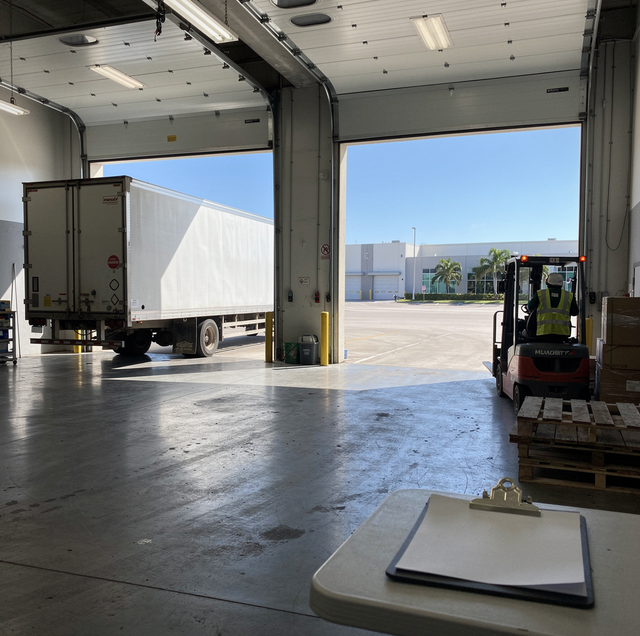
You have probably been told a missed dock appointment slides to the next open door. Your driver runs late, you call ahead, the office tells you to bring your trailer anyway, and you get worked in whenever a spot frees up. It is the kindest version you will hear, and not the one your operation runs on.
Your appointment was never a place in a queue. It was a door, a crew, and a lane of floor your freight had to itself, and when you miss it, none of that waits on you. It goes to another load, and what you get back is whatever your receiver has left. Knowing what happens next tells you which of your own options are still open to you.
A Missed Window Gets Spent, Not Postponed
When a carrier books a slot, the receiving side reserves more than just a time slot. A door comes out of the rotation, a crew is put on that trailer, and a lane of floor is kept clear for whatever comes off it. A warehouse running a coordinated arrival and departure schedule across several dock doors is balancing all of that against every other load booked that day.
The moment the window passes, none of it sits idle. The crew moves to the next trailer on the board, the door takes the next kingpin, and the floor fills with another shipper's pallets. Nothing was held back for the truck that did not arrive, because keeping a door empty for an absent trailer idles the shift longer than the delay itself. Nobody made a choice about your load; the day simply moved past it.
So a late trailer does not rejoin the schedule. It leaves the schedule and comes back as unscheduled work at a building whose day is already committed, and it gets handled in the gaps, if gaps open at all. When none do, the trailer leaves loaded, and your carrier's dispatch weighs the options of holding the freight for pickup or routing it back to origin. It is the change most shippers never see, because the tracking screen keeps showing an appointment that stopped existing hours ago.
What Tears a Dock Schedule Apart After One Late Trailer?
Doors are the constraint, and a door is occupied for the whole unload rather than for the instant of arrival. That single fact turns one late trailer into a difficult afternoon for six other carriers. A truck arriving ninety minutes behind its slot does not find ninety minutes of empty dock waiting; it lands on a door already promised to the next appointment, so the receiving desk chooses between holding your freight in the yard until a door frees up and bumping a carrier who arrived on time. Either way, the delay does not stay with your load. It travels down the board, appointment by appointment, and the last truck of the day inherits every minute lost before it arrived.
Pressure shows up in the yard first. Every trailer waiting on a door takes a parking position, and a yard that fills stops working as a buffer and starts working as a second queue, with drivers idling in it and nowhere to put the next arrival. Trucks that cannot get through the door cannot leave, so trailers on the property pile up while the door count stays the same.
The outbound side feels it next because the same crew and the same equipment build the outbound loads. Receiving that runs long pushes outbound staging into the evening, which is how one missed morning appointment turns into a late departure nobody connects back to it. By then the cause is six hours old, and nobody on the floor is still talking about it.
The Driver's Clock Keeps Running While the Trailer Waits
Federal hours-of-service rules put a hard edge on a driving day, and waiting does not pause them. A property-carrying driver may drive a maximum of 11 hours after 10 consecutive hours off duty. The rule is blunt about the outer limit: a driver may not drive beyond the 14th consecutive hour after coming on duty, following 10 consecutive hours off duty, and off-duty time does not extend that 14-hour period.
Detention is the term for a driver and tractor held at a facility past the scheduled window, and every hour is time lost from a window nobody can give back. A driver who burns three hours on a door has three fewer hours to reach the next stop, and the stop after it gets rescheduled whether anyone plans for that or not.
That wait carries a measured safety cost. A 2018 audit report from the Department of Transportation's Office of Inspector General, titled Estimates Show Commercial Driver Detention Increases Crash Risks and Costs, but Current Data Limit Further Analysis, estimated that a 15-minute increase in average dwell time, meaning the total time a truck spends at a facility, increases the average expected crash rate by 6.2 percent. A dock that routinely holds trucks is putting tired drivers on the road.
Drop and Hook and Live Unload Fail Differently
On a drop-and-hook move, the driver parks the loaded trailer, picks up an empty, and leaves, so a missed window strands equipment and not people. The freight sits, the yard slot gets used, and the unload moves to whenever the dock can take it.
A live unload keeps the tractor, the driver, and the door together for the whole job, so a missed window turns a scheduling problem into a clock problem rather than a parking one. Ask which one your lane actually runs on before you build a recovery plan, because the two need different things from you.
What to Do in the First Hour After a Truck Slips Its Window
Call the receiving desk while the window is still open, not after it has passed. An honest arrival time given early lets the desk reshuffle the board on purpose; the same information an hour late arrives after the door has already gone to somebody else, and by then you are asking for a favor and not a slot. Early notice is the only lever you still control.
Ask to be placed into a named opening, and ask what the building needs from you to make it work. A receiver who knows your trailer holds forty floor-loaded cartons can put it where the labor is, and a receiver who knows nothing has to treat it as a risk and park it. The more your driver can tell them about weight, pallet count and stacking, the smaller the gap they need for you.
Never ask a dock crew to rush a rescheduled unload: a trailer released while a lift truck is still inside drops the machine and its operator, so leave releases to the dock supervisor.
You will know the window has closed before anyone tells you. The sign is a door number that has quietly changed hands: your load was booked into it, and another carrier's trailer is backed onto it. Once that has happened, the appointment book records the morning's plan and not the afternoon's work, and your freight is waiting on a gap that has to open somewhere else.
Frequently Asked Questions
There is no universal grace period, and every receiving operation runs its own. Ask your receiver what theirs is before you need it, because the answer changes how you route a driver who is already running behind on the rest of your delivery day.
It can. The rule allows the 30-minute driving break to be satisfied by any non-driving period of 30 consecutive minutes, whether on-duty not driving, off-duty, sleeper berth, or a combination of those taken consecutively. Your driver's wait at your door may cover it, so you gain time.
Yes. A property-carrying driver may not drive after 60/70 hours on duty in 7/8 consecutive days, and may restart a 7/8 consecutive day period after taking 34 or more consecutive hours off duty. Your Thursday slots are closest to it; check before you book your driver.
Partly. A driver is exempt from certain logging requirements when operating within a 150 air-mile radius of the normal work reporting location and not exceeding a maximum duty period of 14 hours. If your lanes are short and local, your carrier may be working that way, and your window still closes within the same 14 hours.
Detention names the time a driver and tractor are held at a facility beyond the scheduled window. It gets tracked as time, and your carrier weighs it when grading you as an easy or hard stop. Buildings known for holding trucks get offered fewer of them, and the drivers who do come are the ones nobody else wanted.
Start with the appointments themselves. Slots booked against best-case transit times fail every week a lane runs normally, so book against the time your lane takes. Share arrival updates as soon as a driver knows, not at the window. Then look where your freight lands: a warehouse partner running several doors on a coordinated arrival and departure schedule has somewhere to put a late trailer and a crew who can pick it up, while a single-door building has nowhere to put it and no way to give you one.
Book your inbound freight into a facility that schedules arrivals and departures across multiple dock doors — our team can hold a trailer, work it into the first opening and keep your day intact. Delivery and Warehousing Solutions serves West Palm Beach, Palm Beach Gardens, and Jupiter. Call (561) 842-0044.
