
Project Storage: Closing the Gap Between Delivery and Install
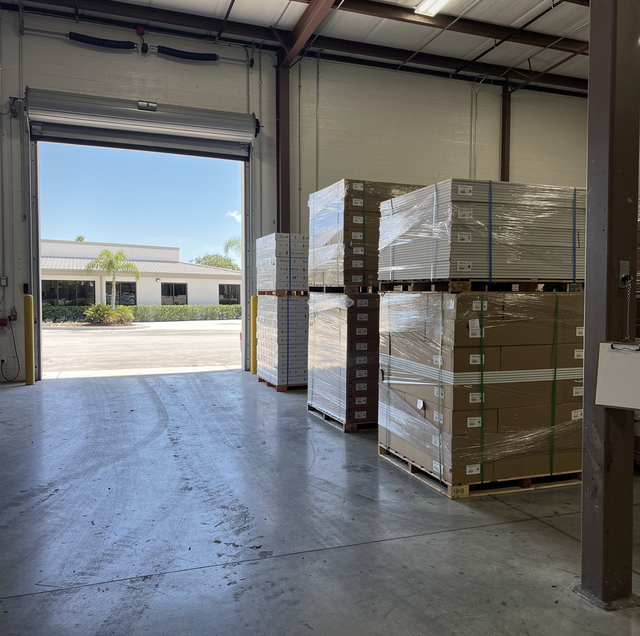
A supplier ships according to its own production and freight schedules. A construction site, a retail buildout, or an event floor runs on a completely different schedule, tied to permits, contractor availability, or a single load-in day locked in months earlier. Those two schedules rarely land on the same date. When materials or equipment arrive before the site, the crew, or the next show is ready for them, someone has to hold that inventory in between, protected and organized, until the two calendars catch up.
Quick Answer: Project storage holds materials or equipment for a fixed period tied to one job or event. Goods are received against a packing list, staged in delivery sequence, and released against outbound manifests that match the install schedule.
That gap between a supplier's ship date and a site's ready date is what project and event storage is built to close. The hold runs on the job's clock. It opens when goods start shipping and closes when the install, the show, or the move is finished, and everything in between is organized around the date the site can finally take delivery. Below are the operational shapes that gap takes across different kinds of business, and what a storage arrangement does about each one.
| Project type | Where the two schedules split | What the storage site does about it |
|---|---|---|
| Construction or build-out | Materials land before walls, flooring, or fixtures can go in | Holds and protects goods until the site can receive them |
| Retail or hospitality refresh | One purchase order has to reach many separate addresses | Kits inventory by location and releases it in rollout order |
| Trade show or event | Crates come home needing a look before the next show | Holds crates between events for inspection and re-kitting |
| FF&E install | Furniture and equipment arrive out of installation order | Sequences goods by room so crews get what belongs there first |
| Phased equipment rollout | Installs run for weeks after everything has already landed | Releases one wave at a time and reinserts a wave when a date moves |
| Relocation | The old space closes before the new one opens | Bridges the two addresses until the new site is ready |
A Construction or Build-Out Where Materials Beat the Site
Contractors order fixtures, casework, and equipment early to lock in availability, but the site is rarely ready to receive them on that same timeline. Walls might not be up, flooring might not be down, or a certificate of occupancy might still be pending. If those materials show up anyway, a jobsite with no secure, weatherproof place to put them either turns the truck away or lets pallets sit exposed on a slab.
Receiving against the packing list or bill of lading: every inbound shipment is checked against what the supplier says is on the truck, with any shortages or damage noted at that point rather than discovered later during installation. Goods stay grouped under that job's own paperwork rather than merging into open stock, so casework for one build-out never gets picked up by another. Pieces with a serial number or asset tag are logged individually, and the rest are palletized and shrink-wrapped for the hold.
Most build-outs draw from several vendors that rarely ship in the same week. Holding each delivery as it lands lets the set be consolidated before anything moves, which matters because a site that can take one truck at a time cannot do much with half a fixture package. Outbound then moves against an appointment window set with the superintendent, not against whatever has piled up in storage.
A Retail or Hospitality Refresh Rolling Out from One Staging Point
A multi-location refresh, new signage, fixtures, seating, finish materials, usually gets ordered as one large purchase from one or a handful of vendors, then needs to reach a list of individual sites on a rollout calendar that unfolds over weeks. Shipping everything straight to each location invites a mismatch: one store gets its full kit early, another gets half of what it needs, and nobody at headquarters knows which is which without a phone call.
Incoming goods get organized into a kit for each site rather than sorted by item type, so a matched set of fixtures, signage, and finish pieces for one location moves together. A kit that is short a piece stays flagged as short rather than shipping anyway, since a store crew working a single overnight closure cannot wait on a backorder nobody called out. Release follows the rollout order, one site's kit at a time, and a location that slips a week gets held intact rather than broken back into general stock.
Where each kit is going matters as much as what is in it. Not every address on a rollout list has a dock, and a strip-center storefront or a hotel service entrance may take nothing larger than a box truck.
Confirm dock access at every destination before a rollout ships. A site without a dock needs liftgate or inside delivery specified on the outbound, or a receiving crew ends up muscling heavy fixtures off a standard truck by hand.
A Trade Show or Event Where Crates Go Out and Come Back
Show freight has a rhythm that ordinary inventory does not: crates go out, get used hard for a few days, and come back needing attention before they go out again for the next show. A booth, exhibit panels, and display cases pack up fast at the end of a show floor, and what actually made it back into each crate is not always what left the warehouse the last time.
Send the show's return packing list with the crates, noting anything left behind, broken, or given away on the floor. Checking crates against that list at intake catches gaps weeks before the next move-in date, rather than on move-in day.
Each crate is opened and checked against its packing list, and anything damaged or missing is flagged for the exhibitor to repair or replace before the crate ships to the next event, ensuring the set that leaves is complete. Consumables get counted at the same time, since literature, giveaways, and flooring pieces come home in whatever quantity survived the last floor rather than the quantity that left.
Show freight is organized by show date rather than item category because the unit that must be ready to move is the crate, not the component. Outbound timing follows the event's own rules: some shows want freight at an advance warehouse ahead of move-in; others take direct-to-site delivery within a narrow window on move-in day; and each crate gets labeled for whichever applies before it leaves.
An FF&E Install Sequenced Room by Room
A hotel renovation, a healthcare buildout, or a large office fit-out generates furniture, fixtures, and equipment for dozens or hundreds of rooms, and none of it arrives from the manufacturer in the order the install crew will actually need it. A shipment might land with case goods for floor six mixed in with lighting for floor two, all on the same truck.
Sequencing by room instead of by SKU: Goods get staged and released in the order the install crew is working, so a crew shows up to find exactly what that space needs already grouped, not a warehouse pull sheet to sort through first. Asset-tagged pieces are tracked to their assigned room, and outbound manifests for each release match the installation schedule for that stretch of the project rather than listing everything in storage at once.
The site sets the size of each release. A hotel under renovation can usually give up one corridor and one service elevator at a time, so a release is sized to what that floor can hold while crews work it. When a room gets held back, its pieces return to the same job's inventory still assigned to that room number instead of being folded into the general pull for the next floor.
A Phased Equipment Rollout Where Installs Run for Weeks
Some projects buy everything at once and install it slowly. A restaurant group replacing front-of-house equipment across its locations, a school district swapping classroom furniture over a summer, a company refitting audiovisual gear floor by floor: the purchase lands as one order because that is how the vendor produces and ships it, while the installs run in waves shaped by business hours, closure windows, and technician availability.
Those are two different rhythms, and the storage site is where they meet. Goods come in as one large receipt and go out as a series of small matched waves, each pulled against a wave list rather than against the order as a whole. Serial numbers get recorded against the wave they shipped in, so a unit that arrives damaged at one location can be traced to that wave and swapped from the balance still in storage.
Schedules move, and absorbing that is most of the value. When a location cannot take its wave on the planned date, the wave gets held intact and reinserted later in the sequence while the one behind it moves up. Nothing goes back to the vendor, and nothing gets re-shipped from the manufacturer, because the goods never left the building. What changes is the release order, which is a list rather than a truck.
Goods sensitive to heat and humidity, electronics especially, get flagged for climate control at intake rather than discovered mid-term.
A Relocation Where the Old Space Closes Before the New One Opens
A lease on the old facility often ends before the new one is ready for move-in, whether due to construction, permitting, or a buildout running behind schedule. That leaves a business with inventory, equipment, and fixtures that need a place to go that is neither the old address nor the new one yet.
Inventory comes out of the old space under the same receiving process as any other inbound shipment, counted and logged on the way in rather than trusted to the move crew's memory, then stages out to the new address as areas of that site become ready to accept it. A business rarely needs all of it back at once: office furniture tends to go first, records and back stock later, and equipment last, once utilities and the network at the new address are actually live.
Splitting the move that way also creates a decision point nobody gets when a truck empties a whole building into a new one in a single day. Anything that sat untouched through the entire bridge period is visible as exactly that, and it can be released or dropped from the new floor plan before it takes up room at the new address. The term closes when the last of it moves out.
Frequently Asked Questions
The difference shows up on delivery day. A freight carrier needs someone on site who can sign the delivery receipt and enter an exception on it before the driver leaves, and a self-storage unit has nobody in that role and no dock to work a trailer against. Whatever comes off the truck goes into the unit unexamined, and the first real look at it happens weeks later, when a crew opens the door expecting a complete set.
An early or late delivery is typically received under a short hold noted directly on the storage agreement, since the formal term does not begin until the date set for that job. Terms for this kind of exception vary by agreement, which is why it gets written in rather than assumed.
At receipt, goods get sorted into two groups: items ready to stage as-is, and items set aside pending repair or replacement. Keeping those groups physically separate from the start prevents a damaged unit from getting mixed back into a kit that is otherwise complete.
A scanned check-in and check-out creates a timestamped record of when each tagged item moved, who released it, and where it went. Paper manifests alone show what arrived and what left; scanning adds the movement history in between.
Yes. A partial pickup gets logged against the same release paperwork as the full order, so the remaining balance stays visible without needing a fresh count of what is left every time a crew comes back for another portion.
Closing out a project involves more than moving boxes out the door. The remaining inventory gets reconciled against the original intake manifests first, so any shortage or leftover item is flagged and resolved before the space is vacated and the term closes.
Talk through your project's storage window — get a plan for receiving, staging, and release that matches your install schedule. Delivery and Warehousing Solutions serves West Palm Beach, Palm Beach Gardens, and Jupiter. Call (561) 842-0044.
