
Reverse Logistics Explained: The 5 Steps Behind Returns
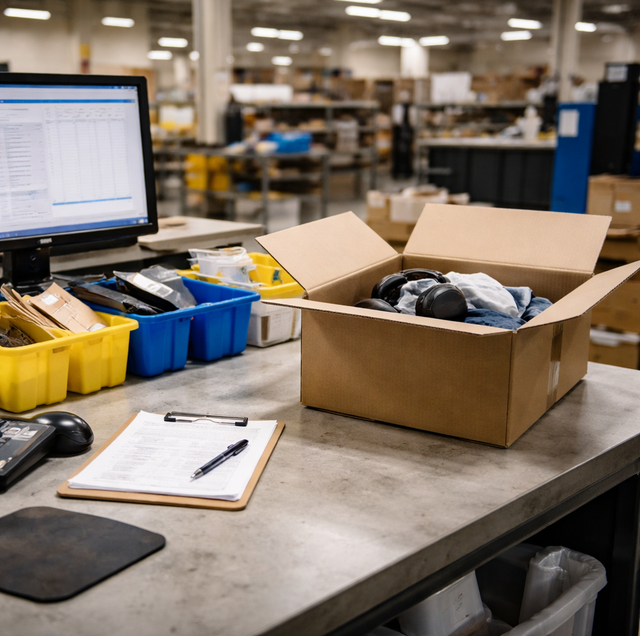
Quick Answer: Reverse logistics is the flow of goods back from the customer to the seller or warehouse, covering returns, exchanges, recalls, repairs, and recycling. It matters because how fast and how accurately those items are received, inspected, and put back into use directly affects margin and repeat purchase rates.
Every product that leaves your warehouse has a chance of coming back. A customer orders the wrong size, a retailer sends back unsold stock, a manufacturer issues a recall, or an item arrives damaged and needs a replacement. The path that moves those goods back from the buyer toward the seller is reverse logistics, and for a growing number of businesses it now moves a meaningful share of everything they ship.
Most operations spend enormous effort perfecting the outbound side: picking, packing, and getting orders to customers quickly. The return trip usually gets a fraction of that attention, which is exactly why it quietly drains money. Handled well, reverse logistics recovers value, keeps sellable inventory in circulation, and keeps customers willing to buy again. Handled poorly, it buries good stock in a back room, delays refunds, and turns a solvable problem into lost margin.
Reverse Logistics Is the Mirror Image of Fulfillment
Outbound fulfillment is predictable. You know what is in stock, where it sits, and what condition it is in, because you put it there. Reverse logistics inverts every one of those assumptions. The item is already out in the world, its condition is unknown until it arrives, and it can show up mixed in with dozens of other unrelated products in the same inbound shipment.
The reverse flow starts the moment a customer decides to send something back and ends when that item reaches its final resting place: back on a shelf, refurbished, sold off in bulk, recycled, or thrown out. In between, the goods physically travel in the opposite direction of a normal order, from the customer's hands, through a carrier, into a receiving dock, and onto an inspection bench. The same building that shipped the product out often takes it back in, but the workflow inside is almost entirely different.
Understanding that flow before designing a process is the whole game. Treat returns as a random pile to deal with "eventually," and they accumulate faster than they clear. If you treat the reverse flow as a defined lane, with a starting trigger and a set of decisions at the end, the pile never forms in the first place.
The Five Steps of a Returns Process
A disciplined reverse logistics operation runs the same sequence every time, no matter what comes back.
1. Return authorization: Nothing should ship back without a return merchandise authorization, or RMA. This is the ticket that tells the warehouse an item is coming, what it is, why it is being returned, and which order it belongs to. An RMA lets the receiving team expect the shipment and match it to the original sale instead of guessing. It also filters out returns that fall outside policy before they ever enter the building.
2. Receiving: When the return arrives, it is logged against its RMA and separated from outbound inventory. Returns and fresh stock must never mingle, because an unverified item on a picking shelf becomes a second unhappy customer. Good receiving captures the item at the door and routes it straight to inspection rather than letting it drift into general storage.
3. Inspection and grading: A worker opens the box, verifies the contents against the RMA, and assigns a grade based on condition. Grading is the pivot point of the entire process. A common approach uses simple tiers: like-new and fully resellable, lightly used and needing minor attention, damaged but salvageable for parts, and unsellable. Clear, written grading rules keep two different inspectors from grading the same item two different ways, which is what makes the downstream decision trustworthy.
4. Disposition: Disposition is the decision about where the graded item goes. The main paths are:
- Restock: Like-new items go back into sellable inventory, ideally the same day they clear inspection.
- Refurbish or repair: Items with minor faults are cleaned, repackaged, or repaired, then returned to stock as open-box or refurbished.
- Liquidate: Goods that cannot be sold at full price are sold in bulk to secondary buyers to recover part of their value.
- Recycle: Materials with no resale value are broken down so components or raw materials can be reused.
- Dispose. Items that are unsafe, contaminated, or worthless are discarded responsibly.
5. Closing the loop: The financial and inventory records are updated: the refund or exchange is completed, inventory counts reflect the restocked unit, and the return reason is recorded. That last piece feeds back into the front of the business, which is where returns actually get reduced.
Why Returns Are Costly and Hard to Run
Returns resist the efficiency tricks that make outbound shipping cheap. Three traits make them stubborn.
The condition is unpredictable. An outbound order is uniform; an inbound return could be pristine, filthy, missing parts, or not even the product that was supposed to come back. Every item needs a human decision, which is slow and hard to automate.
The mix is chaotic. A single return shipment can contain many different SKUs from many different orders, so a worker cannot batch the work the way they would batch picking. Each unit is handled individually.
Returns are time sensitive. The value of a returned item decays the longer it sits unprocessed. A seasonal or trend-driven product that lingers in a returns queue can lose most of its resale value before anyone grades it. A phone or gadget can be superseded by a newer model. Speed is not a nicety here; it is directly tied to how much of the original value survives.
Add these together, and the cost of a poorly run returns operation shows up in several places at once: labor spent re-handling items, storage space clogged with unresolved stock, refunds delayed to frustrated customers, and sellable goods aging into markdowns. None of these appear on a single budget line, which is why the expense goes unnoticed until someone measures it.
How a Warehouse or 3PL Handles Returns Fast
This is where a dedicated warehouse partner earns its place. A third-party logistics provider, or 3PL, that runs returns at volume builds the operation as a purpose-designed lane instead of an afterthought squeezed between outbound shifts.
That lane usually includes dedicated inspection stations staffed by people who do nothing but grade returns, so decisions get faster and more consistent with repetition. It runs on standardized grading rules agreed with the client in advance, so a returned item's fate is decided by policy rather than by whoever happens to open the box. And it is built around one blunt priority: get resellable stock verified and back on the pick shelf as fast as possible, because a unit sitting in the returns area earns nothing while a restocked unit is ready to sell again.
A capable 3PL also handles the exceptions that trip up an in-house team. Recalled products have to be pulled from circulation and tracked. Hazardous or regulated returns cannot simply be tossed in a dumpster; they require proper handling and disposal that follows the applicable rules, which vary by material and jurisdiction. Having a partner who already knows those procedures keeps a routine return from becoming a compliance problem.
Think of the returns lane as a hospital triage bay rather than a warehouse aisle. Everything arriving is assessed on the way in, sorted by severity, and sent to the right treatment immediately, so nothing critical waits behind something routine.
Reducing Returns Before They Start
The cheapest return is the one that never happens, and many returns are self-inflicted at the point of sale. Two levers do most of the work.
Accurate product information cuts down "not as described" returns. Precise dimensions, honest photos, correct sizing guides, and clear specifications mean fewer customers order something that was never going to fit their need. Every return reason captured in step five of the process points at a listing or a product page that could be fixed.
Better packaging cuts down damage-in-transit returns. Protective, correctly sized packaging keeps products intact through the rougher handling of shipping, so fewer arrive broken and bounce straight back. Packaging that is easy to reseal also makes the return trip cleaner when one does happen.
Where Unsellable Goods Go
Not everything can be restocked, and responsible reverse logistics has an answer for the goods that cannot. Rather than defaulting to a landfill, a good operation moves unsellable items down a hierarchy: resell, refurbish, liquidate to a secondary market, recycle the materials, and dispose only as a last resort. Keeping materials in use longer recovers residual value and reduces waste at the same time, which is increasingly something both buyers and business partners expect.
Metrics That Show Whether It Is Working
You cannot manage a returns operation you do not measure. A few numbers reveal its health.
Return rate is the share of shipped orders that come back, watched over time and by product so you can spot a listing or a product problem early. Processing time, sometimes called dock-to-stock for returns, measures how long an item takes from arriving at the dock to reaching its final disposition; the shorter it is, the more value you keep. Recovery value tracks how much of an item's original worth you recapture through restocking, refurbishing, or liquidation instead of writing it off. Together, these tell you whether returns are being contained, cleared quickly, and salvaged rather than dumped.
Frequently Asked Questions
Return management is the customer-facing slice: issuing the RMA, approving the return, and handling the refund or exchange. Reverse logistics is the larger physical and operational system that also covers receiving, inspection, grading, disposition, recycling, and recovering value from unsellable goods. Return management sits inside reverse logistics as its first stage.
It covers any backward flow, not just buyer returns. Retailers send back unsold seasonal stock through a process called returns to vendor. Recalls pull defective units out of the field for repair or destruction. Equipment gets sent in for warranty repair and refurbishment. Reusable shipping assets like pallets and totes travel back for another cycle. All of these run through the same receive-inspect-disposition backbone.
A restocking fee is a charge deducted from a refund to offset the real cost of processing a return, inspecting, repackaging, and returning an item to sellable condition. It is generally justified on high-touch or opened items where that reconditioning labor is significant, and it also gently discourages casual over-ordering. It is usually waived when the return is the seller's fault, such as a defect or a shipping error.
Consistency comes from a written grading rubric with photo references and defined pass or fail criteria for each condition tier, rather than inspector judgment. Many operations add periodic calibration checks, where several inspectors grade the same sample items and compare results to catch drift. Without a shared standard, the same product gets graded differently on different days, and disposition decisions become unreliable.
No. Once a sealed product has been opened or used, most jurisdictions and marketplaces prohibit selling it as new, so it has to be labeled open-box, refurbished, or used. Refurbished electronics also typically require data wiping, functional testing, and repackaging before resale. Skipping those steps risks both a compliance issue and a second return from a disappointed buyer.
Items such as batteries, aerosols, certain chemicals, and some electronics are regulated and cannot go in general trash or standard recycling. They must be segregated at receiving, stored safely, and routed to a licensed disposal or recycling stream that follows the applicable rules, which vary by material and location. A returns operation that handles these categories keeps written handling procedures so a routine return does not create a regulatory violation.
Turn returns from a cost center into recovered value — a purpose-built returns lane gets your sellable stock back on the shelf fast. Delivery & Warehousing Solutions serves West Palm Beach, Palm Beach Gardens, and South Florida. Call (561) 842-0044.
