
Emergency-Response Storage: What It Is and When You Need It
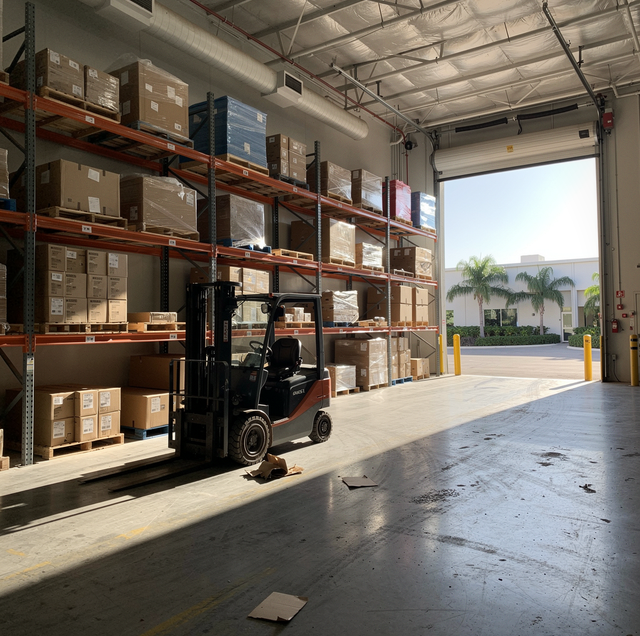
A truck is loaded with product that has nowhere to go. A supplier just told you the next shipment is arriving three weeks early. A storm forecast changed overnight, and now the inventory sitting in your building needs to be somewhere safer by tomorrow. None of these situations align with the timeline of a typical warehouse lease, and that gap is exactly what emergency-response storage is built to close.
Most business owners understand climate-controlled storage or standard 3PL warehousing because they use it every day. Emergency-response storage works differently: it exists for the moments when your regular storage plan runs out of room, time, or both at once.
Emergency-Response Storage Fills the Gap a Standard Lease Leaves Open
A typical warehousing agreement is built around predictability. You sign a contract for a defined footprint, commit to a term, and plan your inventory flow around that fixed amount of space. That arrangement works well until something happens that a fixed footprint was never designed to absorb.
Emergency-response storage is space held in reserve specifically for situations that arise with little warning. It is not a bigger version of your existing lease. It is a separate capability built around speed of access rather than long-term footprint planning. Think of it less like renting an apartment and more like keeping a spare room ready to move into on short notice: the space exists before you need it, so you are not negotiating terms while the clock is already running.
Because the space is pre-arranged, a business that needs it does not have to start from a blank page when a crisis hits. The building, the dock access, and the handling process are already in place. What changes is how quickly product moves in and how long it stays.
Storm Season Turns Inventory Protection Into a Race Against the Clock
Heat and humidity already put pressure on any product that is sensitive to temperature or moisture, which is why climate-controlled storage matters even on an ordinary week. A storm forecast raises the stakes further. Businesses with inventory in a building that could lose power, take on water, or need to be moved out of a facility on short notice often have goods to relocate within a day or two, not over the weeks a standard relocation would normally take.
The same pattern shows up on the other side of a storm. Once power is restored and roads reopen, recovery supplies, replacement inventory, and equipment often arrive faster than a damaged facility can absorb them. Residual moisture makes that problem worse for anything stored improperly during the gap, so getting goods into a climate-controlled space with reliable power quickly matters as much on the way back in as it did on the way out.
Emergency-response storage is built around that timeline. Space can be activated before a storm arrives and held through the recovery period that follows, without a business having to negotiate a new agreement while it is also dealing with everything else a storm creates.
A storage arrangement set up before storm season starts activates faster than one negotiated after a forecast turns urgent.
A Sudden Order Spike Can Outgrow Your Storage Footprint Overnight
Demand does not always build gradually. A distributor lands a contract larger than anything on the books, a retailer sees a product go viral, or a seasonal demand swing sends a wave of new customers through the door faster than the sales forecast predicted. Any of these can leave a business holding more inventory than its current space was ever sized to hold.
The problem is rarely that the business made a bad decision. It is that a lease signed a year or two earlier was sized for a different sales volume, and renegotiating that lease takes months, a fast-moving opportunity does not have. Emergency-response storage gives a business flexible, adjustable space it can bring online for weeks or months at a time, then release once volume settles back to normal, without reworking the underlying warehousing agreement that handles day-to-day operations.
This kind of overflow arrangement also protects the rest of the operation. When incoming freight has nowhere to go, receiving docks back up, staff spend time managing a bottleneck instead of shipping orders, and customer commitments slip. A temporary space absorbs the surge, so the core operation can continue at its normal pace.
Disaster Relief Logistics Move at a Different Pace Than Everyday Shipping
Disaster relief work runs on a different clock than routine distribution. Supplies need to be staged close to where they will be needed, held briefly, and then moved out again in whatever order the situation on the ground demands, sometimes with only hours of notice between each step.
That kind of flow depends on more than open floor space. Cross-docking lets pallets move from an inbound truck to an outbound truck with minimal time sitting in storage, which matters when relief supplies need to keep moving rather than sit and wait for a scheduled pickup. Final-mile delivery then carries goods the last stretch to distribution points, shelters, or job sites, often on a daily schedule that shifts as needs on the ground change. Transportation and logistics management ties these pieces together so that trucks, drivers, and space are coordinated rather than working against each other.
A business supporting relief efforts, whether directly or as part of a contractor's supply chain, needs a storage partner that can operate at that pace without treating every schedule change as an exception to the normal process.
A Disruption Elsewhere in the Supply Chain Can Strand Inventory Right Where You Stand
Supply chain disruption does not have to start in your own building to become your problem. A port delay, a carrier shortage, a factory shutdown two states away, or a shipping lane backed up for reasons unrelated to your operation can all leave freight sitting somewhere it was never meant to sit for long.
When that happens, inventory that was supposed to keep moving instead becomes inventory that needs somewhere to wait. Without a place to put it, a business either pays penalties for freight sitting on a truck, loses track of what it has on hand, or scrambles to find space under pressure with no time to vet the option properly. Emergency-response storage absorbs that wait. Inventory auditing and tracking keeps an accurate record of what came in, what condition it arrived in, and where it sits, which matters most during exactly the kind of disruption that makes normal tracking harder to keep up with.
Once the disruption clears and the shipping lane, port, or carrier is moving again, product held in emergency storage can move out just as quickly as it came in, rather than getting lost in the backlog a disruption tends to leave behind.
Emergency-Response Storage and Standard Warehousing Differ in Terms, Not Just Timing
The clearest difference between emergency-response storage and a standard warehousing agreement is the contract itself. A standard agreement is built around a defined term and a defined footprint, because both sides are planning for the long run. Emergency-response storage is built around activation speed: short notice, flexible duration, and space that is available before a business knows exactly how long it will need it.
That flexibility comes with a different kind of readiness behind the scenes. Space held for emergency use still needs to meet the same standards as any other storage, including climate control and 24/7 surveillance, because a crisis is not a reason to lower the bar on how goods are protected. Insurance coverage matters more under these conditions, not less, since goods often arrive with less advance paperwork and under more chaotic conditions than a planned shipment.
The other difference is scope. Standard warehousing is designed around a business's steady-state operation. Emergency-response storage is designed around the exception to that operation, whether the exception lasts three days or three months. Recognizing which situation you are in determines which arrangement actually solves the problem.
Frequently Asked Questions
A business generally needs to supply a current inventory count and SKU list, note any temperature or handling requirements, and confirm who is authorized to approve intake so the receiving crew is not waiting on a signature mid-delivery. Sharing an estimated arrival window ahead of time also lets a dock get scheduled before the trucks are already on the road, which is usually the difference between a smooth intake and a stalled one.
No set minimum applies. Space can be arranged for a handful of pallets during a small surge or for a much larger footprint during a major disruption, since the arrangement is built around the situation rather than a fixed unit size.
Staff can still receive and shelve the shipment, with the receiving details logged as the goods arrive regardless of what paperwork is still catching up, then reconcile purchase orders or packing lists against that record once the rest of the documentation shows up, so a business is not stuck refusing freight just because normal paperwork did not travel with it.
Yes. A single space can receive inbound goods on one dock while staging and dispatching outbound loads from another, so a business is not forced to choose between holding inventory and keeping shipments moving during a fast-changing situation.
Materials that require specialized hazardous handling or permitting beyond standard inventory storage are generally not a fit, since emergency-response storage is built for the same categories of goods a business would normally keep in climate-controlled or standard warehousing, just under a faster timeline.
It can support both. Space held under an emergency-response arrangement is not limited to sitting still. Product can move out via cross-docking or final-mile delivery straight from that same space, which matters when goods need to keep moving toward a destination rather than waiting for a separate outbound plan to be arranged.
Set up emergency-response storage before you need it — talk with our team about reserving flexible, climate-controlled space for storm season, sudden inventory surges, or supply chain disruptions. Delivery and Warehousing Solutions serves West Palm Beach, Palm Beach Gardens, and Jupiter. Call (561) 842-0044.
