
What Is Pick and Pack Fulfillment? The 6-Step Breakdown
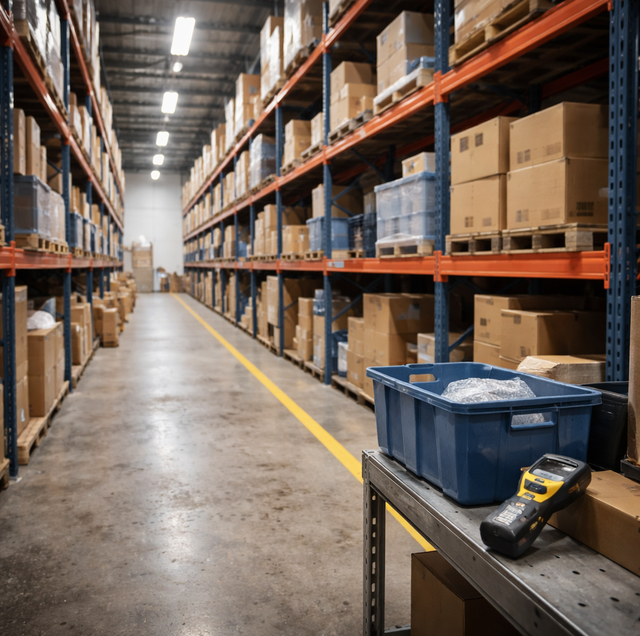
Quick Answer: Pick and pack fulfillment is the warehouse process of pulling ordered items from storage (picking), then boxing, labeling, and shipping them (packing). It covers six steps: receive the order, generate a pick list, pick the items, pack them with the right materials, label the parcel and record it on the carrier paperwork, and hand it to the carrier. Picking methods (single-order, batch, zone, and wave) are chosen to match order volume and profile.
Pick and pack fulfillment is the sequence of work that turns a placed order into a package moving toward a customer. It is the operational heart of any warehouse that ships to buyers, whether the buyer is a shopper who ordered one item online or a retailer that ordered forty cases for a store shelf. The name describes the two motions that carry the most weight: a worker picks the exact items an order calls for from their storage locations, then those items are packed into a shippable parcel. Everything else in the flow exists to make those two motions fast and correct.
How the Order-to-Shipment Flow Actually Works
Before comparing picking methods, it helps to see the whole path an order takes. The methods only make sense once the destination is clear, and the destination is always the same: a labeled parcel on a carrier truck. The flow moves in six defined steps, and each one hands clean information to the next.
Step 1: Receive the order: An order arrives from a storefront, a marketplace, or a purchase order from a wholesale account. The warehouse system captures the line items, quantities, ship-to address, and service level. This is the moment the operation commits to a promise about what and when.
Step 2: Generate the pick list: The system converts the order into instructions a picker can follow. A good pick list is sorted by storage location rather than by the order the customer entered items, so the picker walks the shortest sensible path instead of doubling back across the floor.
Step 3: Pick: A worker travels to each location and pulls the specified quantity. This step is where most fulfillment errors are born, and where scanning earns its keep, since a scan at the shelf confirms the right item before it ever reaches the packing bench.
Step 4: Pack: The picked items reach a packing station, where a packer selects a container, protects the contents, and closes the parcel. Packing is not an afterthought; the wrong box or too little protection shows up later as a damaged-goods claim.
Step 5: Label and record: The parcel gets a shipping label with the carrier's routing barcode and a tracking number, and the shipment is logged into the carrier's system so the carrier and the customer both know it is on the way.
Step 6: Ship: The carrier collects the parcel, and the tracking number goes back to the customer. The order is now the carrier's responsibility, and the warehouse moves to the next one.
A warehouse running this loop hundreds or thousands of times a day is a mail room the size of an airplane hangar, with the same core rhythm repeating at every station. The difference between a smooth operation and a chaotic one is rarely the size of the building; it is how disciplined each of these six steps is.
The Picking Methods and When Each One Fits
Picking is the most labor-intensive part of fulfillment, so the method used to organize it has an outsized effect on cost and speed. No single method is best. The right one depends on how many orders arrive, how many lines each order has, and how the inventory is laid out.
Single-order (discrete) picking: A worker picks one complete order from start to finish before starting the next. It is the simplest method and the easiest to keep accurate, because one tote maps to one order with no sorting afterward. It fits operations with lower daily volume, large or fragile items, or orders that must ship the instant they are picked. Its weakness is travel time, since the same aisle may be walked repeatedly for different orders.
Batch picking: A worker picks the same item for several orders in one trip, then those units are split out to individual orders at a sorting step. When many orders share common items, batch picking collapses a dozen trips to one shelf into a single visit. It suits operations with lots of small, similar orders, such as a store selling a narrow catalog of popular products.
Zone picking: The warehouse is divided into zones, and each worker picks only within an assigned zone. A tote either travels zone to zone accumulating items, or each zone contributes its part, and the pieces are consolidated at the end. Zone picking keeps workers from crossing the whole building and scales well as headcount grows, which makes it a fit for large facilities with wide product ranges.
Wave picking. Orders are released in scheduled groups (waves) timed around carrier pickup windows, staffing, or order priority. A wave might combine batch and zone logic and is coordinated so that everything picked in that window reaches packing together. It fits high-volume operations that must synchronize picking with truck departures and hard cutoff times.
Many mature warehouses mix these methods, running discrete picking for oversized items and batch or zone picking for the fast-moving core of the catalog. The point is to match the method to the order profile rather than force every order down one lane.
The Systems That Keep It Accurate
Underneath the physical motion sits a warehouse management system (WMS), the software that knows where every item lives, what every order needs, and which worker should do what next. The WMS builds the location-sorted pick lists, reserves inventory so two orders never claim the last unit, and updates stock counts the instant an item leaves a shelf.
Barcode scanning is the accuracy layer that turns intent into proof. When a picker scans the shelf location and the item, the system verifies in real time that the right product and quantity are in hand, and it flags a mismatch before the error travels downstream. Scanning at pick, at pack, and at the label step creates a chain of checkpoints, so a single mistake gets caught at the next station instead of arriving at the customer's door. This is the difference between an operation that hopes it is accurate and one that can prove it.
Packing Is Where the Order Becomes an Experience
Packing decisions carry more weight than they first appear to. The right container matters twice: a box far larger than its contents wastes dimensional shipping cost and invites damage as items shift, while a box too small gets stressed and bursts. Void fill (paper, air pillows, or foam) keeps contents from moving, and the choice of fill should match the fragility and value of what is inside.
Two packing services often ride alongside the basics. Kitting assembles multiple separate items into a single ready-to-ship unit ahead of time, so a bundle that always sells together is picked as one line instead of several. Branded inserts, custom tissue, or a printed thank-you card turn a plain parcel into a piece of the brand, which is why many growing sellers treat the unboxing moment as marketing rather than packaging.
How Accuracy and Speed Shape the Customer Relationship: Fulfillment quality reaches the customer as two feelings: did the right thing arrive, and did it arrive when promised. A mispick (the wrong item or wrong quantity) forces a return, a refund, or a reship, each of which costs far more than picking it right the first time and erodes trust in the seller. Slow fulfillment, meanwhile, shows up as a shipping estimate the customer resents. Tight pick-and-pack accuracy lowers return rates, and consistent speed protects the reviews and repeat orders that a growing brand depends on. The warehouse floor is invisible to the buyer, yet it decides much of what the buyer thinks of the brand.
Why Many Operations Outsource Pick and Pack to a 3PL
Running fulfillment in-house means carrying the fixed weight of it all the time: warehouse space leased year-round, packing stations, a WMS license, scanners, and a trained crew that must be staffed for the busiest week even during the slowest one. That fixed overhead sits on the books whether ten orders ship that day or ten thousand.
A third-party logistics provider (3PL) takes on that base and spreads it across many clients, so the cost of the building, the software, and the labor becomes a shared, variable expense that flexes with order volume. A seller gains trained pickers, an established WMS, carrier relationships, and the ability to absorb a seasonal surge without hiring and then laying off. The trade is a loss of some direct control in exchange for shedding the fixed cost and operational complexity of running a warehouse. For a business whose advantage is its product rather than its logistics, handing the six-step flow to a specialist frees capital and attention for the parts of the business that actually differentiate it.
Frequently Asked Questions
Pick and pack refers specifically to pulling and packaging ordered items, while full-service fulfillment wraps that core in the surrounding services: receiving and putting away inbound inventory, storing it, managing stock counts, handling returns processing (reverse logistics), and reporting. Pick and pack is the shipping engine; full fulfillment is the whole vehicle around it.
Operations track a pick accuracy rate, calculated as correct picks divided by total picks, and well-run warehouses commonly target the high-nine-nines. Many also watch order accuracy, which counts an order as correct only if every line in it is right, so a single mispicked line fails the whole order even when the other lines are perfect. Order accuracy is the harder and more revealing number.
Yes, but it requires a controlled environment and tighter timing. Items such as food, supplements, or certain cosmetics are picked and packed inside climate-managed zones, packed with insulation and coolant, and released in tight waves so they spend as little time outside their required range as possible before the carrier collects them.
A SKU (stock keeping unit) is the unique code assigned to each distinct product variant, down to size and color. Clean, unique SKUs are what let a scanner and the WMS tell a medium blue shirt from a large blue one at the shelf. Poor SKU discipline, such as one code covering several variants, is a leading hidden cause of mispicks.
When part of an order is out of stock or stored in a different facility, the system can authorize a split shipment: the available items are picked and packed now, and a backorder is created for the rest to ship when it arrives. Each parcel gets its own tracking, and the customer is notified so a partial delivery is not mistaken for a short shipment.
An each pick pulls a single sellable unit, typical of direct-to-consumer orders, while a case pick pulls a full sealed carton, typical of wholesale and retail replenishment. The distinction matters because the same warehouse often stores product in cases but must break some open into eaches, and the picking method and slotting differ sharply between the two.
See how a purpose-built fulfillment floor handles your pick and pack — so you ship faster and field fewer returns. Delivery & Warehousing Solutions serves West Palm Beach, Palm Beach Gardens, and South Florida. Call (561) 842-0044.
