
What Is Cross-Docking? How It Speeds Up Distribution
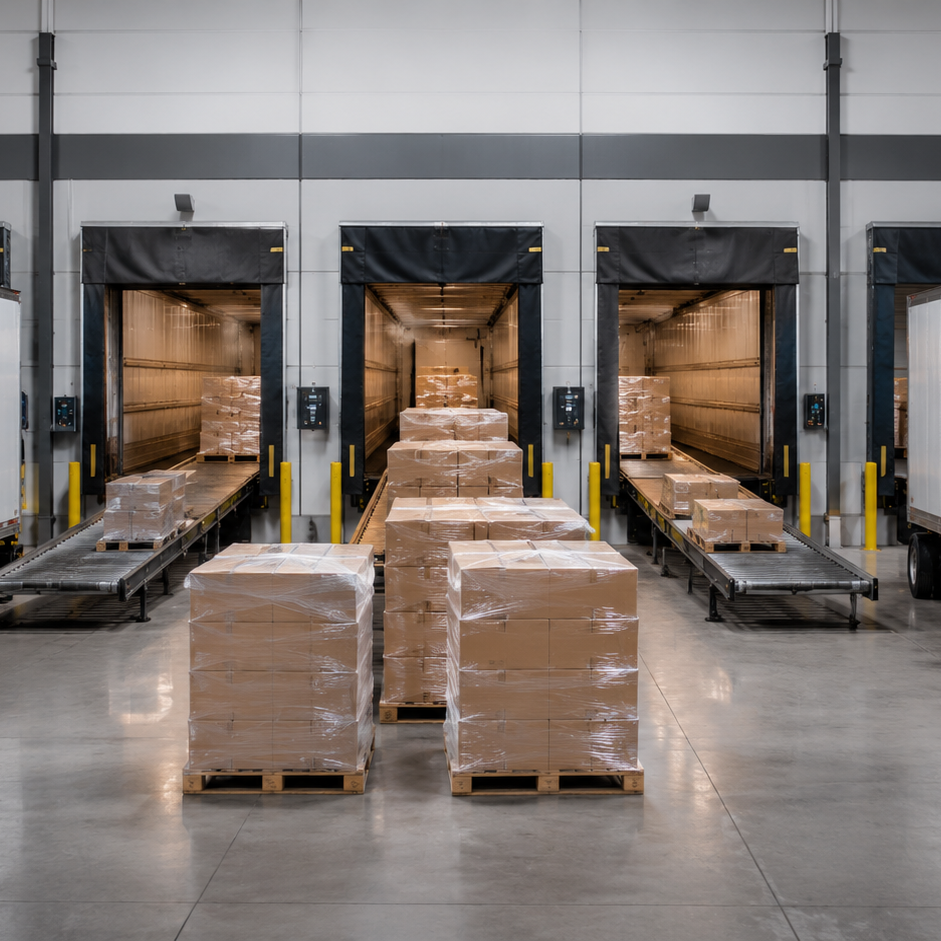
Quick Answer: Cross-docking is a distribution method where incoming goods move almost directly from the inbound truck to outbound trucks, with little or no time spent in storage. Products are unloaded, sorted, and reloaded for their next destination at a dock, rather than being put away on shelves and picked later. It speeds up distribution by cutting out the storage step, which reduces handling, shortens delivery times, and lowers storage costs. It fits fast-moving, pre-sold, perishable, or already-sorted goods — not products that need to sit in inventory until orders come in.
In traditional warehousing, a product arrives, gets put away on a shelf, waits, and is later picked, packed, and shipped when an order comes. Cross-docking skips most of that. The goods barely touch down before they're back on a truck headed to their destination. For the right kind of product, it's one of the fastest ways to move inventory through the supply chain — and understanding how it works shows why it can cut both time and cost out of distribution.
How Cross-Docking Works
The name describes it: goods come in one side of the dock and go out the other, crossing through with minimal pause. An inbound truck arrives and is unloaded. The products are quickly sorted by where they need to go next — by destination, by order, by outbound route. Then they're loaded onto outbound trucks and sent on their way. The defining feature is what doesn't happen: the goods aren't put into long-term storage, shelved, and picked later. They flow through the facility, spending little to no time in storage.
That flow is the whole point. A traditional warehouse is built around holding inventory until it's needed; a cross-dock is built around moving inventory as fast as possible. The dock becomes a sorting and transfer hub rather than a storage location. In practice, timing and coordination are what make it work: inbound and outbound shipments have to be planned so that what arrives has somewhere to go almost immediately. When it's run well, a product can arrive in the morning and be back on the road to its destination the same day, never having been shelved at all.
Why It Speeds Up Distribution
Cutting out the storage step removes a lot of time, handling, and cost from the process.
| Benefit | How cross-docking delivers it |
|---|---|
| Faster delivery | Goods skip storage and move straight to outbound |
| Less handling | No put-away and later picking — fewer touches |
| Lower storage costs | Little to no warehousing space and time used |
| Fresher product | Perishables spend less time in transit limbo |
| Simpler flow | Receiving and shipping happen close together |
The biggest gain is speed. By eliminating the put-away-wait-pick cycle, products reach their destination faster — sometimes dramatically so. Less handling is the second win: every time goods are moved, shelved, and picked, it requires labor and creates opportunities for damage or error, and cross-docking removes those extra touches. Third is cost: goods that don't sit in storage don't consume the warehouse space and time that storage costs money for. For perishable or time-sensitive products, the reduced time in the supply chain also means fresher products reaching customers. There's a quality benefit, too: fewer touches mean fewer chances for the product to be dropped, mishandled, or misplaced, so goods that flow straight through tend to arrive in better shape than goods that are handled repeatedly during storage and picking.
When Cross-Docking Fits — and When It Doesn't
Cross-docking is powerful for the right goods, but it isn't right for everything, because it depends on products moving through quickly rather than waiting.
It works well for products that are already sold or allocated to a destination upon arrival, so there's no need to hold them. It suits perishable and time-sensitive goods that benefit from minimal delay, high-volume fast-moving products with steady, predictable flow, and pre-sorted or pre-packaged shipments that are ready to go back out with little processing. In these cases, the goods have somewhere to go the moment they arrive, which is exactly what cross-docking needs.
It doesn't fit products that need to sit in inventory until orders come in, goods with unpredictable or slow demand that have to be stored and drawn down over time, or items requiring significant processing, inspection, or assembly before they ship. Those need traditional warehousing, where storage and on-demand fulfillment are the point. Many operations actually use both: cross-docking for the fast-moving, pre-allocated goods and standard warehousing for everything that needs to be held.
The quick test for whether a product suits cross-docking: when it arrives at the dock, does it already have a destination? If it's pre-sold or allocated and ready to move straight back out, cross-docking can speed it up and cut cost. If it needs to wait on a shelf until an order shows up, it belongs in regular storage.
Frequently Asked Questions
Cross-docking is a distribution method where incoming goods are moved from the inbound truck, sorted, and loaded onto outbound trucks with little or no time spent in storage in between. Instead of being put away on shelves and picked later when orders come, the products flow through the dock and head straight to their next destination. The facility acts as a fast sorting and transfer hub rather than a storage warehouse, which is what gives cross-docking its speed.
It removes the storage step from distribution. By skipping the put-away, wait, and later picking cycle, goods reach their destination faster and get handled fewer times, which cuts labor and the risk of damage. Because the products don't sit in storage, they don't consume the warehouse space and time that storage costs money for. The combined effect is faster delivery, less handling, and lower storage costs compared to traditional warehousing.
Cross-docking suits goods that are ready to move straight back out: products already sold or allocated to a destination on arrival, perishable and time-sensitive items that benefit from minimal delay, high-volume fast-moving products with steady demand, and pre-sorted or pre-packaged shipments needing little processing. The common requirement is that the goods have somewhere to go immediately, so they can flow through rather than wait in storage.
Avoid it for products that need to be held in inventory until orders arrive, goods with slow or unpredictable demand that must be stored and drawn down over time, and items requiring significant inspection, processing, or assembly before shipping. These need traditional warehousing, where storage and on-demand fulfillment are the purpose. Cross-docking only works when products move through quickly; goods that have to wait belong on shelves, not at a cross-dock.
Yes, and many do. The two methods serve different needs, so it's common to cross-dock the fast-moving, pre-allocated, or perishable goods that are ready to ship while using standard warehousing for products that must be stored until orders come in. Combining them lets a business speed up the distribution of goods that suit it while still holding inventory for goods that require it. A logistics provider can help determine which products flow which way and how the inbound and outbound schedules need to align to keep the cross-dock side running smoothly. Setting that up well is what turns the concept into real savings on the floor.
Speed Through, Don't Store
Cross-docking speeds up distribution by doing less: goods move from inbound to outbound trucks with little or no storage in between, cutting out the put-away-and-pick cycle that slows traditional warehousing. The payoff is faster delivery, less handling, and lower storage costs — but only for products that are ready to move straight through, like pre-sold, perishable, or fast-moving goods. Items that need to wait for orders still belong in regular storage. Match the method to the product, and cross-docking moves the right inventory through your supply chain at speed.
Looking to move product through faster and cut storage costs? — Get cross-docking and distribution handled by a local logistics team. Delivery and Warehousing Solutions serves West Palm Beach, Palm Beach Gardens, Jupiter. Call (561) 842-0044.
